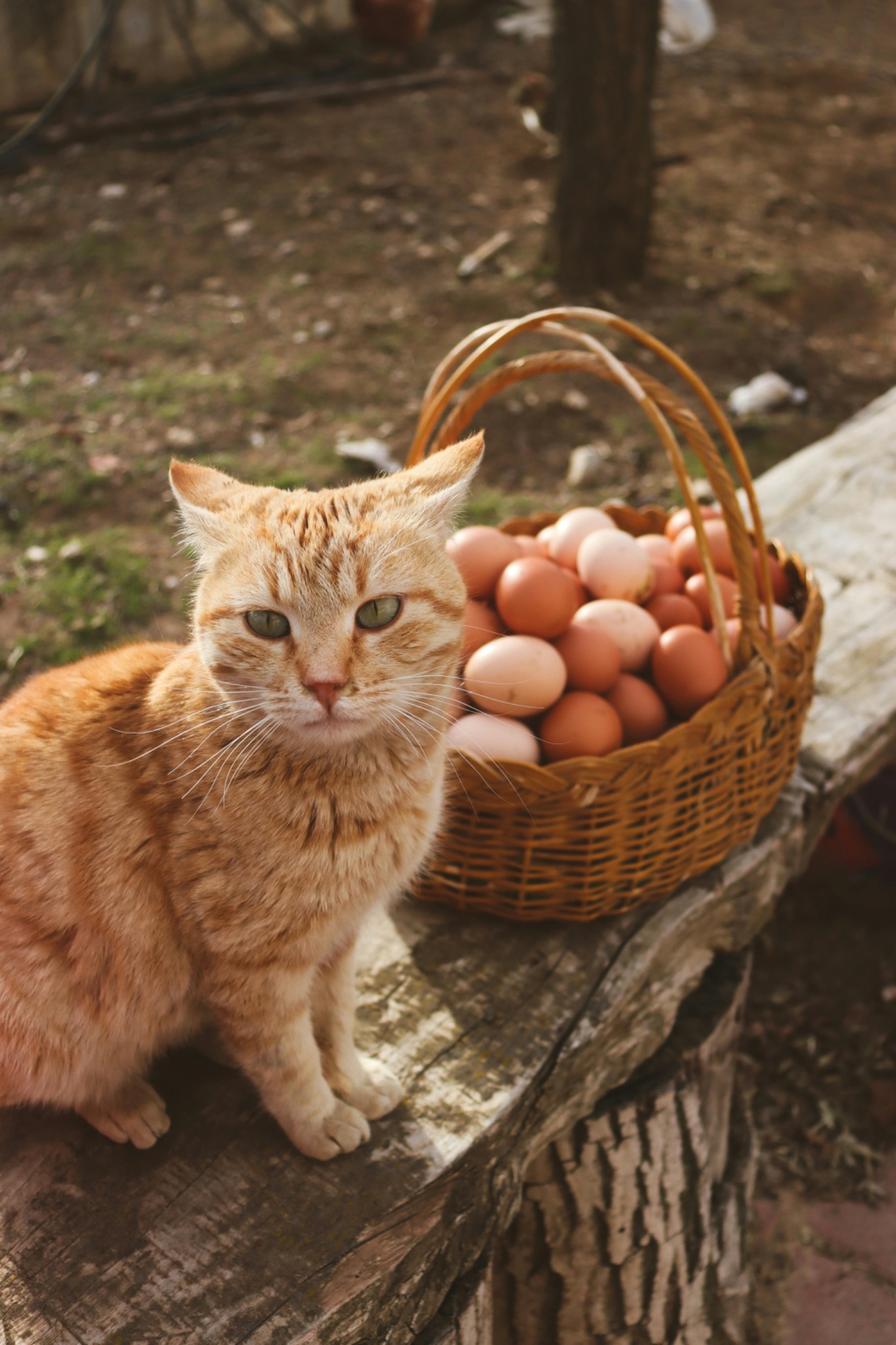
Could Chickens Cure Your Cat Allergies?
How the unlikely pair might help you breath easier…
How do cats cause allergies?
If you can’t help but sneeze when walking into a room with a furry feline, you’re not alone. Humans are susceptible to 8 different allergens produced by cats, but 1 in particular is responsible for upwards of 95% of human cat allergies- the Fel d 1 protein. The common house cat (among other feline species) produces this protein in its saliva, and it’s recognized by some human immune systems as a foreign invader. In an attempt to eject the foreign invader from the body, common allergy symptoms such as itchy eyes, a runny nose, or asthma are produced. However, the severity and frequency of these symptoms may vary person-to-person.
Many individuals with a cat allergy report cat hair to be the number one contributor to their symptoms. While Fel d 1 is produced in-part by moisture-secreting glands beneath a cat’s hair follicles, its primary secretion is actually through the animal’s saliva. As cats naturally groom their own coats, the protein-rich saliva is transferred to the fur, thus making cat fur a hub for allergen distribution. The protein likely supports its feline makers by assisting in the spreading of pheromones to the environment, and internally carrying steroids and hormones throughout the body. All cats, even hypoallergenic ones, produce and need the protein for biological function. Hypoallergenic cats do tend produce lower amounts of Fel d 1 than other cats, often making them a more suited pet for people with allergies. Overall, age, breed, gender, and status of hormone producing organs may contribute to variations in the protein production among individual felines.
Are there any solutions?
There just may be. An unlikely ally has been found in chickens! Similarly to humans, chickens have the ability to produce antibodies after exposure to an antigen; such as the Fel d 1 protein in cats. Research has shown that chickens raised around cats produce an antibody, labeled AFD1, that can attach to the Fel d 1 protein and change its shape. The new shape is less likely to be recognized by the human immune system as a foreign invader; thus preventing the production of allergy symptoms when exposed. The largest benefit of this antibody is that it can be passed on to offspring. Hens can be raised around cats, and the antibody will subsequently be found in the yolks of the eggs they produce. These egg yolks can be powdered and added to cat food mixtures. When consumed, the antibody in the food will bind to the Fel d 1 protein produced by the feline and neutralize it as an allergen to humans. In this way, most any cat can become hypoallergenic.
Can’t I just feed my cat eggs from the grocery store?
Unfortunately not. Just any old chicken egg won’t do the trick. To be effective, it’s imperative the eggs come from hens exposed to cats. The egg yolks used in cat food marketed against allergies are also specifically tested to confirm the presence of the AFD1 antibody. It’s also important to remember that although Fel d 1 is the most common protein to cause cat allergies, there are 7 others that could be to blame. AFD1 antibodies found in cat allergy food are unlikely to be effective against those other protein allergies. If you’re someone with a cat allergy that’s desperate for a solution to enjoy your feline friends, it’s important to consult with both your doctor and a vet today!
Post a comment